“Why Aren’t There Hurricanes in Michigan?”
Weather.com radar map of the Great Lakes taken at 4:40pm on Sunday, November 17, 2013
(Note from the editors: When we approached James Miller, the new director of the Manchester District Library and self-proclaimed “weather-fanatic”, about writing a weekly weather column for The Mirror, he kindly agreed. This is the first in the series….)
In science it is often the answers to 鈥渟tupid鈥� questions that tell you the most.
鈥淚f the Earth is spinning really fast then why don鈥檛 we fly off?鈥� or 鈥淲hy aren鈥檛 people in Antarctica upside-down?鈥� 聽The specific answers to those questions tell you great stuff about gravity, astronomy, and how our bodies work.
So why aren鈥檛 there hurricanes in Michigan? 聽Or Maine? 聽Or Arizona?
That answer tells you a lot about weather.
If you think of 鈥渂ad鈥� weather (I prefer it when the weather is cold or rainy or, as my daughter says 鈥淚t can still be a beautiful day even if it cloudy, right, dad?鈥�) as a fire, then water is usually the fuel.
Storms of any kind need heat to get big and make rain. 聽Water is very, very good at holding heat. 聽A small storm or bunch of clouds that pass over water is like a small fire passing over a large patch of dry wood.
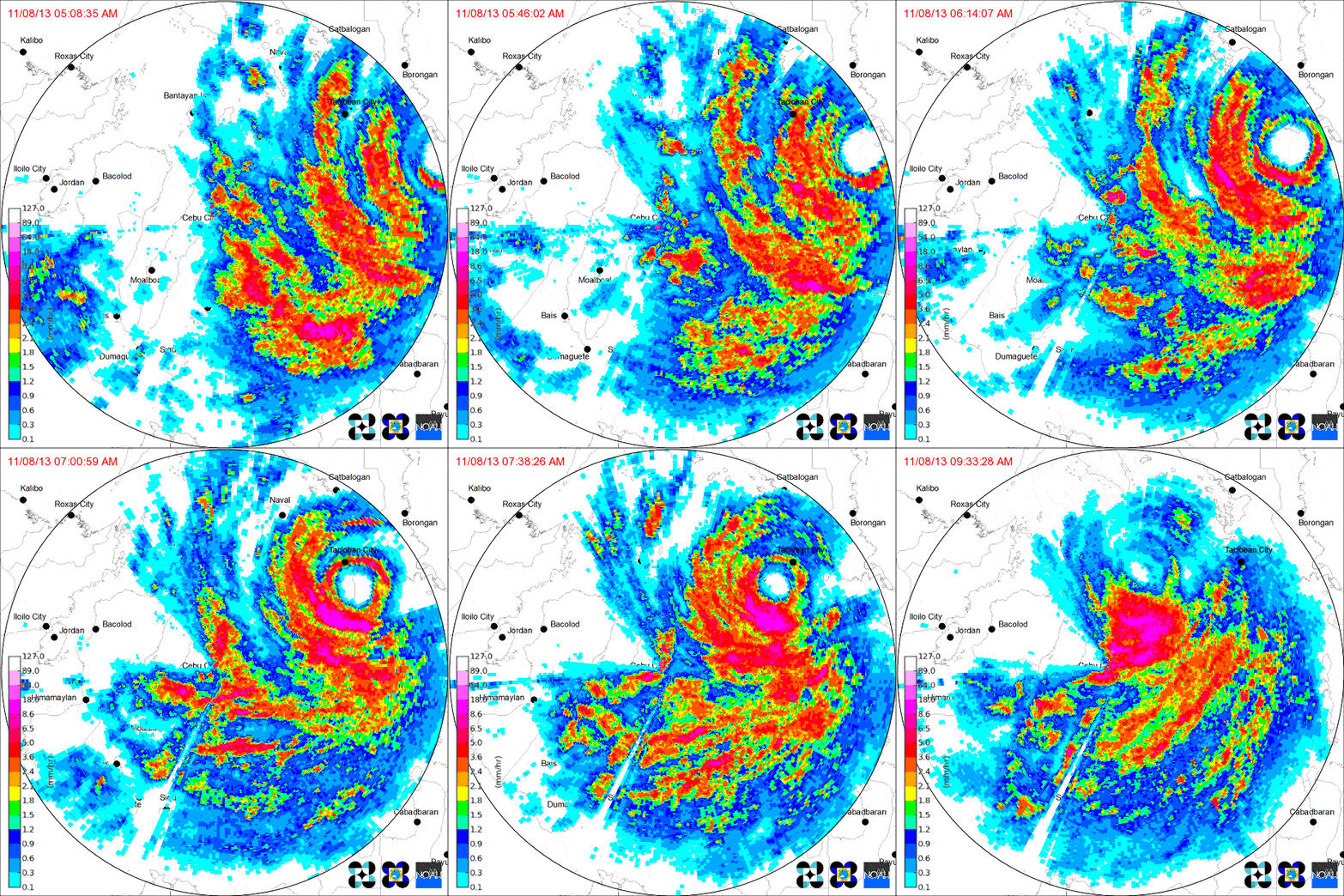
Loop of doppler radar imagery showing Typhoon Yolanda/Haiyan’s second Philippine landfall, on the island of Leyte. Tacloban City was struck by the northern eyewall, the most powerful part of the storm. The PAGASA Cebu City radar site began to transmit intermittently as the typhoon neared, eventually failing altogether (last frame). From Wikimedia Commons
Hurricanes, like forest fires, are objects of opportunity. 聽They need a lot of conditions to get going. 聽One of those conditions is a lot of 鈥渇uel.鈥� 聽That means lots and lots of water, and the warmer the more energetic.
This is why hurricanes, typhoons, and cyclones happen or begin in warm climates. 聽Water that starts out in Florida or Cuba or the Philippines already has lots of energy to begin with. 聽When the right kind of clouds and winds start to suck up that heat energy from the ocean is when an ordinary thunderstorm turns into something like a hurricane.
In Michigan we are surrounded by water, yes. 聽But the Great Lakes are cold compared to the oceans around the equator and small compared to them too. 聽Storms that cross the Great Lakes do get energy from them, but not enough to turn a thunderstorm into a hurricane.
This is also why hurricanes start to die as they head north and / or cross land. 聽No fuel for the fire.

On the left, Typhoon Haiyen (which recently struck the Philippines) is placed over the southern United States for size comparison. On the right, Hurricane Katrina from an actual real-time image. Midwestern storms are big. But hurricanes and typhoons are bigger.


You must be logged in to post a comment Login